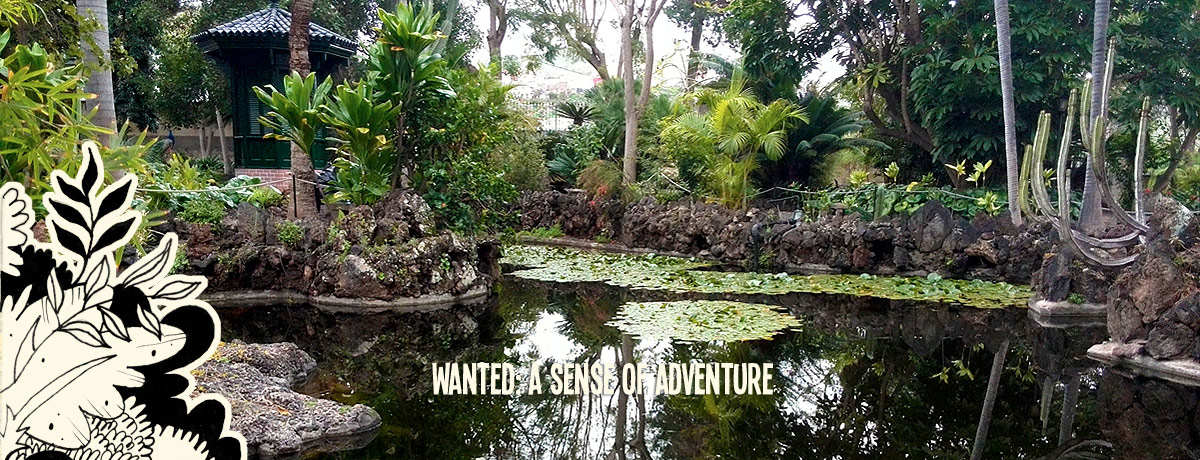
The sweet scent of jasmine greets you on arrival at the entrance to the Jardín de la Marquesa. It is the welcome to a place made for strolling in the shelter of an extraordinary variety of plants. We are on the outskirts of the city of Arucas, in the north of the island and just a few kilometres from the capital.
A walk that can almost never be done in complete solitude. You will most likely be accompanied by the distinctive parade of peacocks that live here. They are the true owners of the place and the ones who liven up each visit with their colourful displays and graceful movements. This welcome is the prelude to a gentle stroll beneath vegetation brought from across the world.
An orchard waiting to be explored. More than 500 plant species from five continents reveal themselves to visitors. Together they form a landscape out of place, breaking through the sea of banana plantations, the iconic scenery that characterises this area all the way to the sea.
Several fountains decorate the garden, with water being one of the few elements that breaks the prevailing silence.
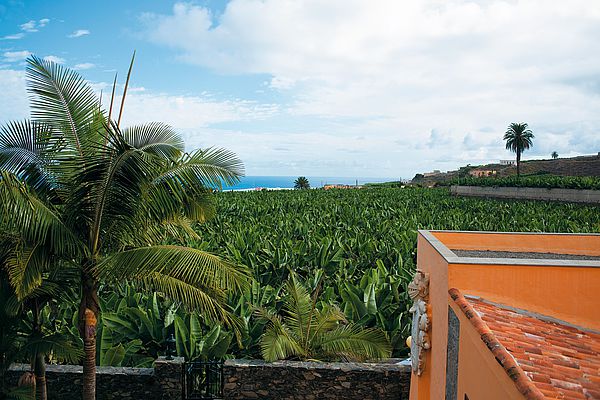
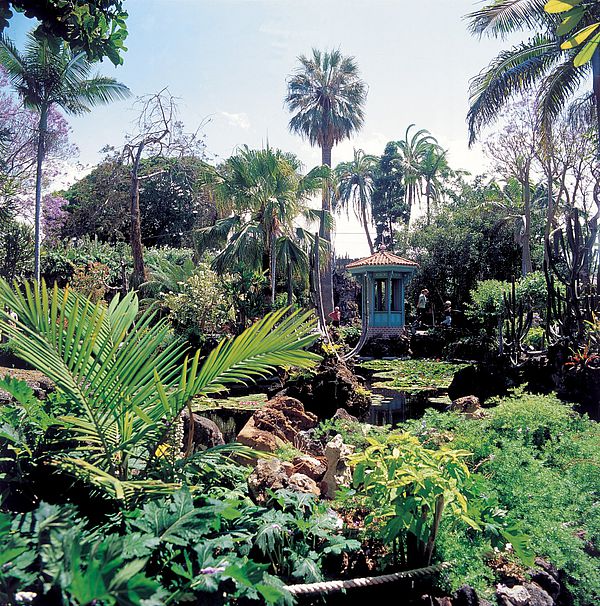
Located at the base of Mount Arucas, its fertile soil has for centuries received the sediments that run down from the slopes with the rain. For this reason, almost any kind of plant can take root and flourish easily in this area. Here you will find, for example, a dragon tree more than 200 years old, a beautiful species endemic to the Canary Islands, and a magnificent fig tree that draws every gaze.
Once you reach the manor house in the middle of the grounds, its neoclassical façade gives the estate a special distinction. The origin of these gardens dates back to 1880, when Don Ramón Madam y Uriondo, the first Marquis of Arucas, began planting around a summer palace. A good example of the natural beauty of the many hidden gardens on the island. A gift that carries us back to memories of another time, two centuries later.
By bus
From the San Telmo Central Station in Las Palmas de Gran Canaria, take line 206 (Las Palmas–Bañaderos–Arucas), and get off one stop before reaching the Arucas Bus Terminal. You will find yourself right in front of the garden, on the GC-330, at the level of the main façade of the Marquisate Palace.
Another option is line 205 (Las Palmas–Tamaraceite–Arucas), which goes to the Arucas Bus Terminal. Once in Arucas, from the same terminal, take line 206 on its return route to Las Palmas de Gran Canaria. In this case, the first stop is the best one to reach the garden, coming from the town of Arucas.
The GC-330 main road from Arucas to Bañaderos passes in front of the garden, and there is a bus stop very close by in both directions.
By car
You can reach the Marquesa garden on foot, crossing part of the old town, located in the upper channel, and taking the Camino Viejo (Old Royal Path), which leads directly to the main entrance of the garden. If travelling by car from Las Palmas de Gran Canaria, simply take the northern road towards Arucas, the GC-2, and turn off onto the GC-20.
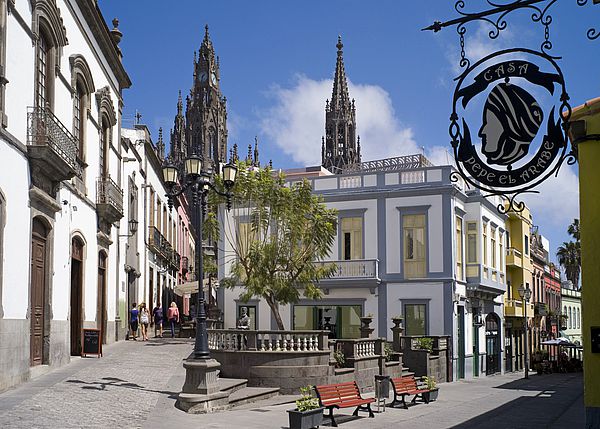
The municipality of Arucas is located in the north of the island, between the municipalities of Firgas, Moya, Teror and Las Palmas de Gran Canaria. Its municipal capital is made up of a small town surrounding the iconic Arucas Mountain, and its historic centre is of great historical and artistic value, its streets still preserving their authentic traditional appearance
Its central square is presided over by the Church of San Juan Bautista, popularly known as the Cathedral of Arucas, despite not officially holding the title of cathedral or basilica. Its spectacular neo-Gothic façades are made of stone carved by local stonemasons, highlighting the renowned skill of the craftsmen of the area. It is the work of the Spanish architect Manuel Vega y March, and construction began in 1909, continuing for 70 years.
The city is well known for being the birthplace of one of the country’s most famous distilleries: Ron Arehucas. A century-old Canarian industry dedicated to producing a wide range of liqueurs, especially rum.
The distillery was founded on 09 August 1884 under the name La Fábrica de San Pedro. From the very beginning, its production enjoyed great success, receiving numerous awards for its quality, and in 1892 it was granted the title of Official Supplier to the Royal Household. However, it was not until 1940 that it began to gain widespread popularity.
In 1965it was officially renamed Destilería Arehucas, in tribute to the original name of the place. The cellar can be visited and includes tastings and a shop for purchasing products.