
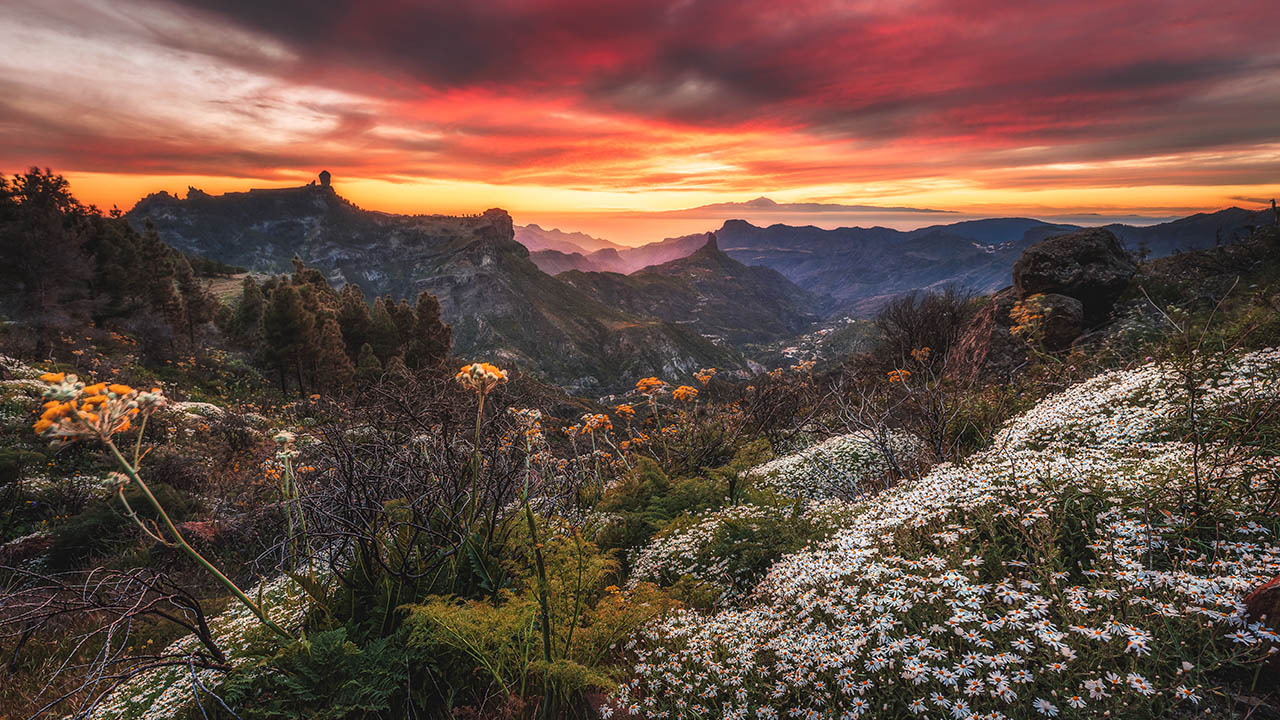
Gran Canaria, an island full of colour in its mountains, cliffs, and ravines
In Gran Canaria, not only are the seasons adorned with almond blossoms and blue tajinastes; but you’ll also spot the rich purple of sage and the bright whites of the retamas.
It is not only the intensity of the light or the blues of the sky that transform Gran Canaria into an island that can shift our mood and delight our gaze. There is also its vegetation: the green of its pine forests, the flowers we find along the paths and in many homes throughout the year, and, above all, the ancient blooms of species that blanket its slopes and ravines through the changing seasons.
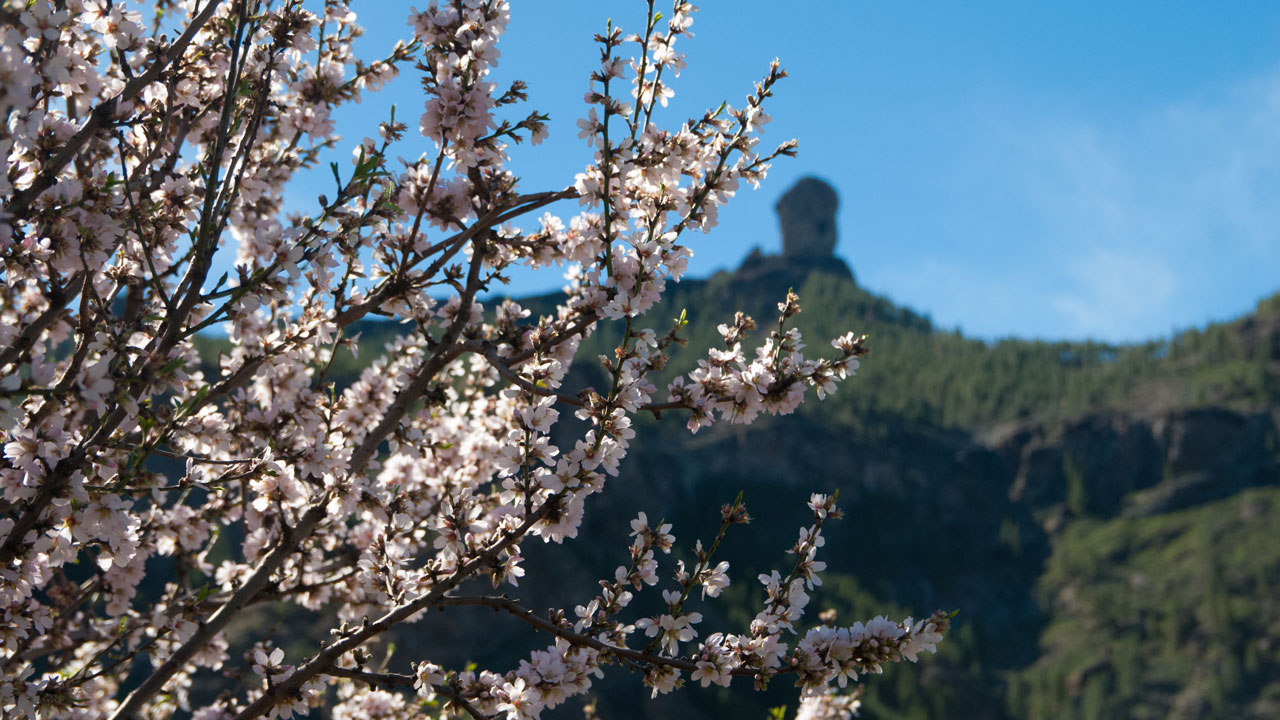
Almond Trees in Bloom
Don’t miss the almond blossom at the end of January and throughout February. During this time, one is often surprised by the landscape of the midlands and the summits of Tejeda, Artenara, and Valsequillo, where a scene closely reminiscent of a snowy landscape unfolds. Yet instead of snow, it’s the brilliant white of the almond trees in bloom, made even more striking by the clear blue sky above. The almond blossom is also celebrated with a festival called Almendro en Flor, which alternates between the municipalities of Tejeda and Valsequillo. Almond trees can also be found in San Bartolomé de Tirajana, various areas of the Agaete Valley, the Guayadeque ravine, and throughout the scenic areas of San Mateo and Santa Brígida, among other parts of the island.
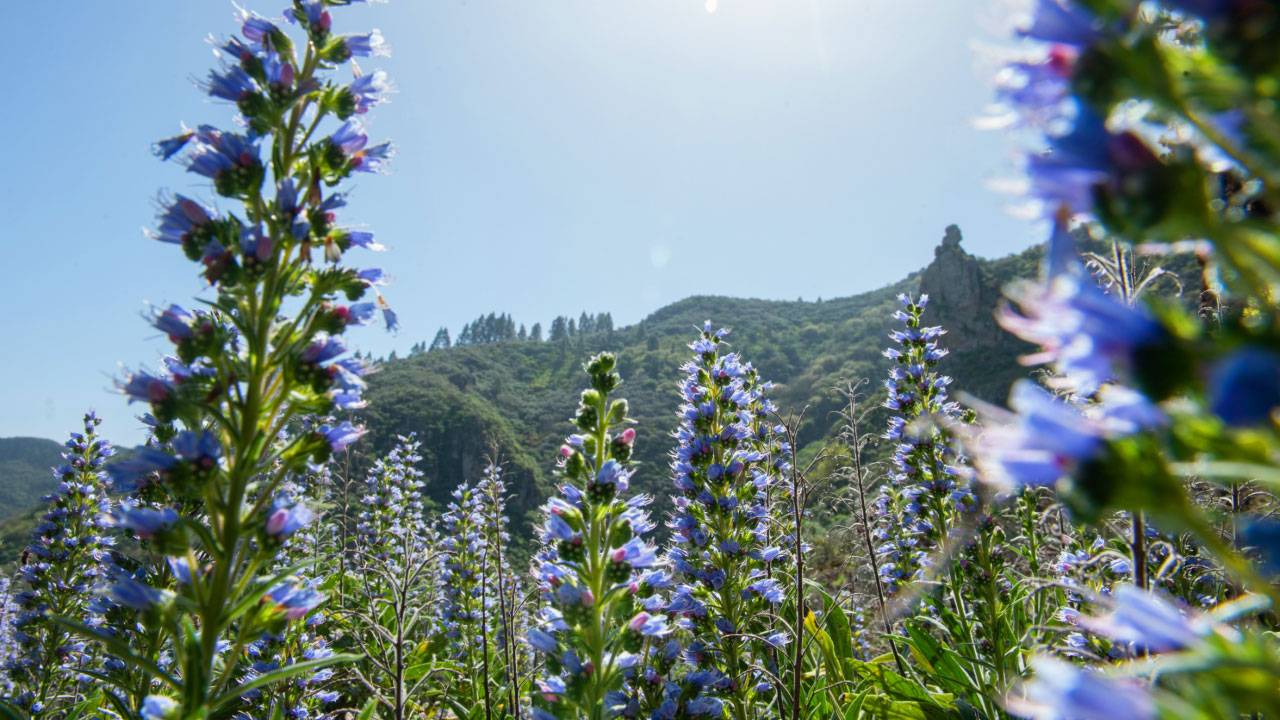
Blue Tajinaste
The bloom of the blue tajinastes, from January to March, is an unmissable event. The best place to witness this vibrant display is Tenteniguada, particularly in La Caldera de los Marteles, where you can also marvel at one of Gran Canaria's most impressive volcanic cones. The tajinaste bloom transforms many of the island’s ravines into a breathtaking show. It is also possible to find entire areas carpeted with these striking flowers in places like Fagagesto and Antona.
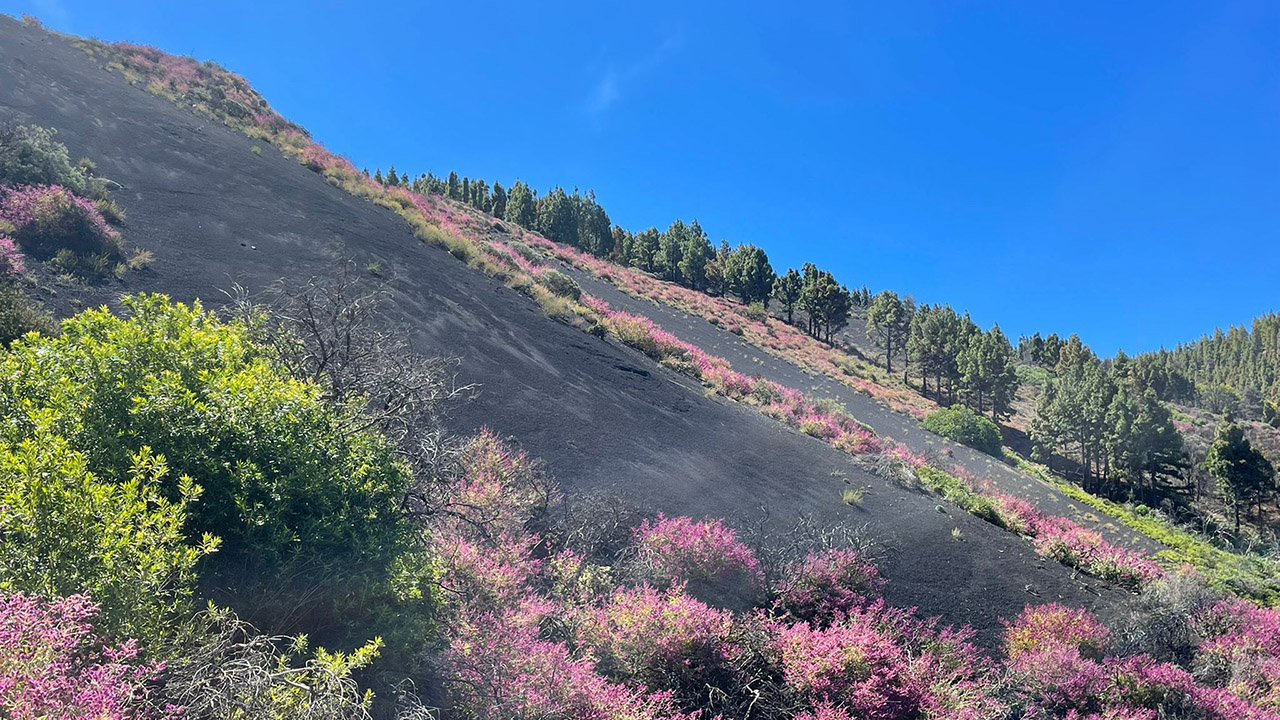
The Purple of the Canary Island Sage
Another burst of colours and contrasts that will surely make us stop in our tracks while exploring Gran Canaria is the bloom of the Canary Island sage (Salvia canariensis). It transforms the fields and hills of areas such as Montañón Negro into a sea of purple. The contrast between the dark volcanic soil and the purple hue offers a glimpse into the beauty that the planet holds when one is fortunate enough to find it. This colourful wonder can also be found in areas of the Tamadaba Pine Forest or near Artenara. Canary Island sage thrives along the coast and up to around 1,800 metres above sea level. Its presence is common from autumn to spring, although, depending on the weather, it may be seen in other seasons too.
The White Glimmer of Retamas
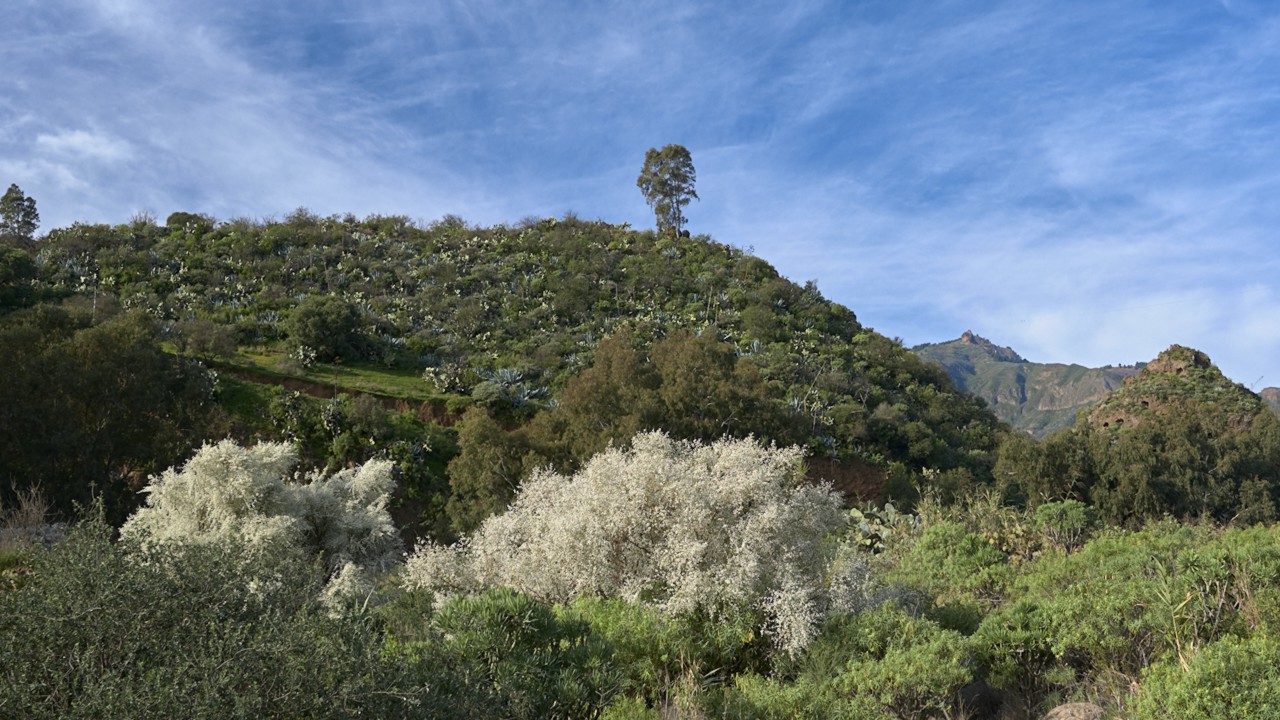
As we approach the fields of Gran Canaria, the bloom of the white retama on its slopes and ravines is undoubtedly one of its most captivating winter attractions. Suddenly, if we lift our gaze, we may find ourselves surrounded by hundreds of shrubs that turn the landscape white, as if a light snowfall had fallen, or as if the frost had overcome the warmth of the day. White retamas can be found in places such as the ravines of San Miguel, Mocán, and Los Cernícalos, as well as in the natural area of the Caldera de Bandama. Along with this sight comes the fragrance of the retama, a scent that both locals and visitors recognise as a part of the island’s charm, an island that seems to reach toward the light and colour in every direction.
Comments are disabled for this post.