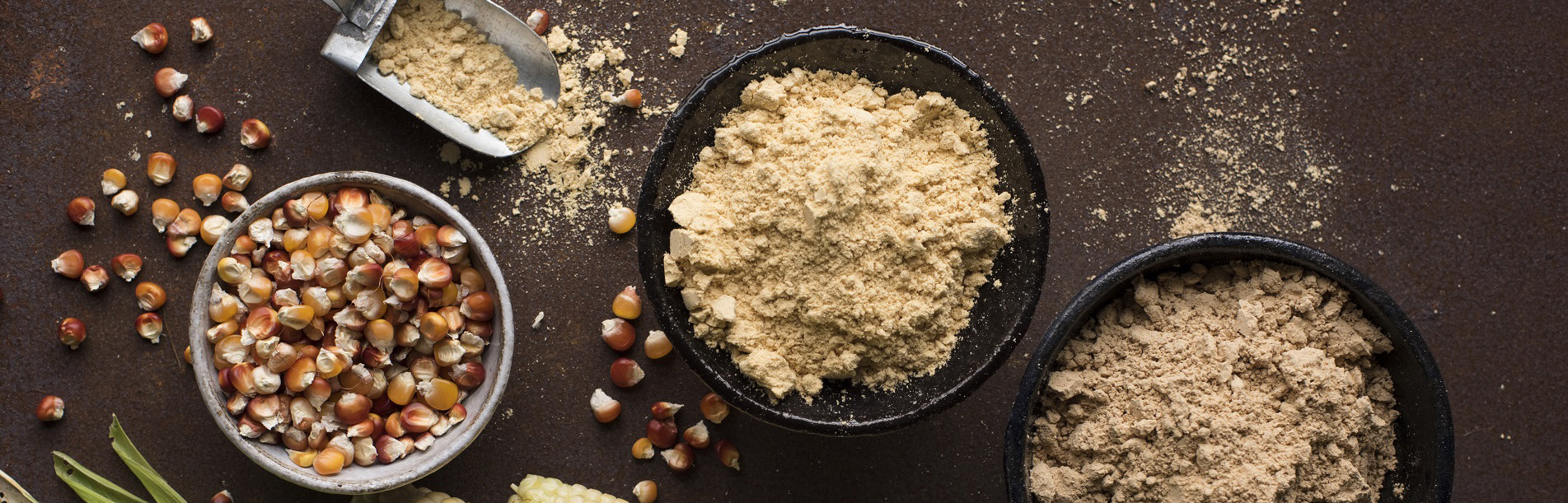
El más conocido de los alimentos tradicionales de Canarias es tan sencillo como su elaboración, pues no es otra cosa que cereales tostados primero y molidos después, sobre todo de trigo y —como se denomina en Canarias al maíz— millo, pero tan completo que se le cita como un superalimento presente en la dieta de los canarios durante más de dos mil años, pues data de la llegada al archipiélago de sus primeros pobladores. Nos referimos al gofio, que en Gran Canaria se elabora con millo desde el siglo XVI y desde entonces es el favorito en esta isla (te contamos más del gofio aquí).

Aunque, como alimento básico en la dieta local, está a la venta en todos los comercios de alimentación de la isla, se puede adquirir directamente en la mayoría de los molinos que todavía tuestan y muelen, algo realmente placentero por el inconfundible olor que desprenden el tostado y la molienda del gofio, sobre todo si es de millo, especialmente aromático.
El molino más antiguo de Gran Canaria, de 1517, se encuentra en el casco del pueblo de Firgas, cuyo ayuntamiento lo ha convertido en museo y oficina de turismo; puede visitarse y, allí, conocer su tecnología hidráulica original con la que a veces muelen gofio para fines demostrativos.

Con cerca de una decena de molinos en activo que distribuyen su producción a tiendas y supermercados de la isla, la mayoría también realiza venta directa, una forma de adquirirlo recién tostado y pleno de aromas.
Visitar cualquiera de ellos siempre será una agradable experiencia al tiempo que adquirimos alguna de las muchas variedades de molienda que hay disponibles hoy día: desde el clásico gofio de millo natural, que no lleva ninguna clase de aditivos, a otras modalidades que pueden incorporar algo de sal o azúcar; también con cereales a elegir, sólo de millo, de cebada o de trigo; mezcla de millo y trigo; o variedad de cuatro o cinco cereales (la mezcla más frecuente incluye millo, trigo, cebada y avena). La producción insular de millo es insuficiente para cubrir las necesidades de los molinos, así que son pocos los que lo tienen. Muy popular, por relaciones históricas, es el millo argentino.
El molino más antiguo en activo es el de Molinería Rojas, en Gáldar (calle Delgado 111, Palma de Rojas) pues se construyó entre 1878 y 1880. Sus piedras las movió el agua de la Heredad de la Vega Mayor hasta 1938, cuando pasó de «molino de agua» (hidráulico) a «molino de fuego» (con motor diésel). Aún conserva parte del acueducto que conducía el agua y aquí sí podemos conseguir «gofio de millo del país», de Los Arbejales (Teror), Fontanales (Moya), Montaña Alta (Guía)... «Yo prefiero más la zona de El Palmital y Santa Cristina [en Guía], es un millo más pequeñito, más redondito y más sabroso», confiesa el molinero Mario Molina.
El Molino de Fuego de Telde (calle María Encarnación Navarro 25, en el populoso barrio de San Gregorio) también tiene una larga historia detrás, pues funciona desde 1903. Entre sus diferentes moliendas y granos, es posible encontrar gofio de millo local, premiado en el concurso regional de gofios que promueve el Instituto Canario de Calidad Agroalimentaria.
En la Molinería Pérez Gil, en Vecindario (calle Primero de Mayo 148, frente a la iglesia de San Rafael), tenemos al único molino en la zona sur y oeste de la isla, con el aliciente de ver en su interior la maquinaria funcionando detrás del mostrador. Despacha gofio de millo sin gluten.
El Molino de Gofio de San Mateo (calle del Agua 9) es parada habitual de quienes visitan el popular Mercado Agrícola y Artesanal que celebra este pueblo cada semana, de viernes a domingo. Su aroma enseguida llama a quienes vienen de compras desde otros puntos de la isla, que también pueden ver y oler, desde el mostrador donde les despachan, cómo sale recién molido desde las piedras por el canal del gofio a la talega donde se recoge.
Molino de Gofio de San Pedro, curiosamente, hay dos con el mismo nombre en la isla y, más curioso aún, es que están en sendos barrios de los municipios de Santa Brígida y de Guía que tienen también el mismo nombre: La Atalaya. En ambos es posible encontrar gofio de millo de la isla. El de Santa Brígida está en la carretera de Las Goteras km 19; el de Guía, en la calle Venezuela 52.