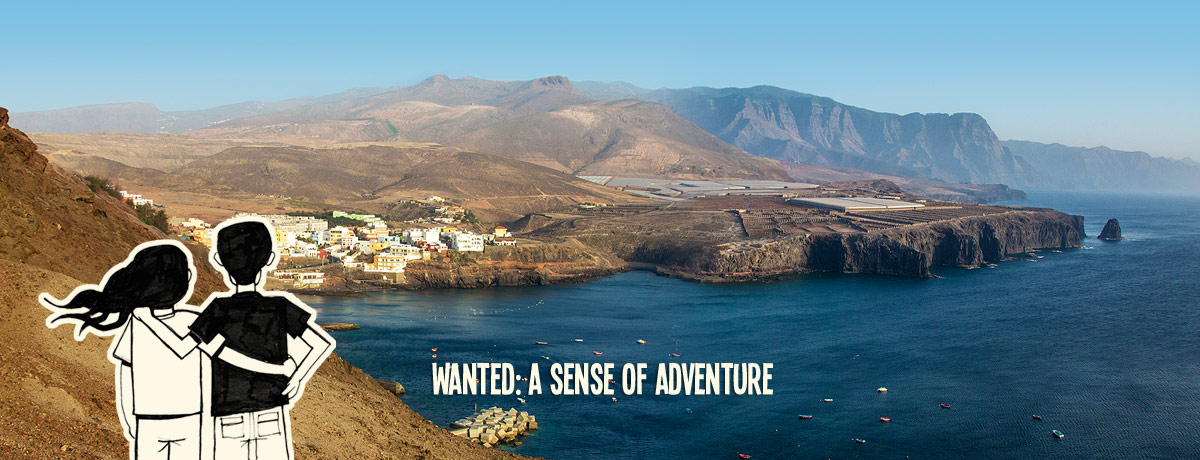
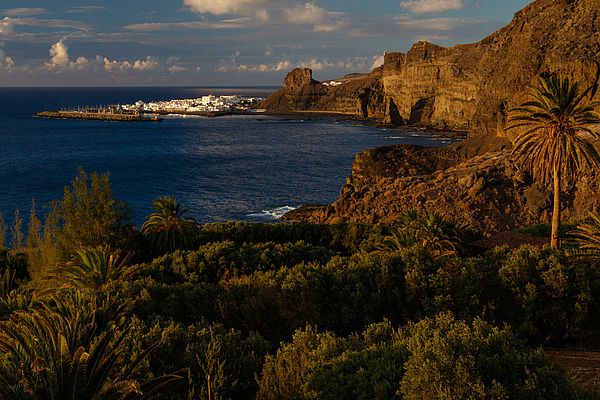
We make our way to the northern municipality of Gáldar, at the far north-western tip of Gran Canaria. Amid its rugged,cliff-lined coast, we come across small villages full of charm, such as Sardina del Norte. Between greenhouses and banana groves, and with the waves of the sea as a backdrop, we reach this distinctive, rugged stretch of coastline.
In addition to its main ports, the island of Gran Canaria has always had smaller harbours—such as Sardina del Norte—a modest port in size, yet of great value to the local people and set in a place of rare character.
Sardina was once one of the many gateways to the island, through which agricultural produce once flowed in and out. Its pier still retains a special charm, and the surrounding landscape endows it with unequalled beauty.
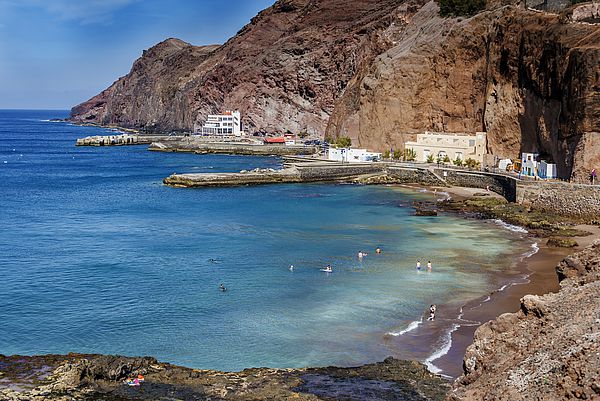
Two key periods stand out in the history of this bay.The first, during the 15th century and the first half of the 16th, coinciding with the struggle for the conquest of the island and the early decades of colonisation. The second, in the 19th century, marked another moment of true importance for the port with the arrival of the sugar industry on the island.
The location of Sardina del Norte was considered strategic by the conquistadors. Facing Gáldar, then the seat of the island’s guanartemes (aboriginal chiefs), they judged it a convenient point from which to reach the political heart of pre-Hispanic Gran Canaria. Indeed, after the conquest, Gáldar became the first capital of the island, under the name Royal City of Gáldar.
The Port of Sardina retained some of its importance through its connection with the sugar trade. Though this declined from the second half of the 16th century onwards, as the Port of La Isleta (today’s Puerto de la Luz and Las Palmas) became the island’s main harbour. This decline was compounded by the gradual abandonment of Gran Canaria’s sugar industry over the centuries, owing to the growing production of this crystalline sweetener in the Americas.
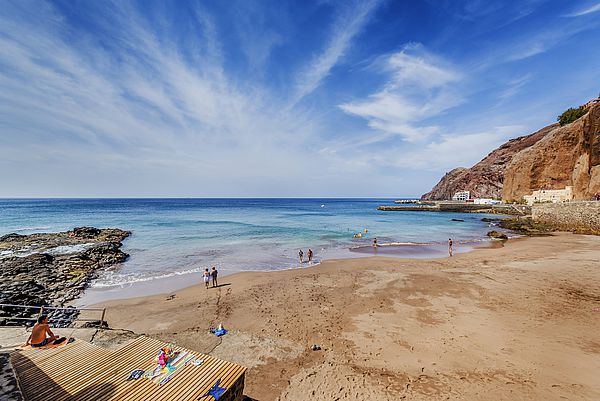
Yet time has not robbed this bay of its power to enchant. Its allure endures, seasoned and serene, as both beach and fishing port. Quiet and distinctive.
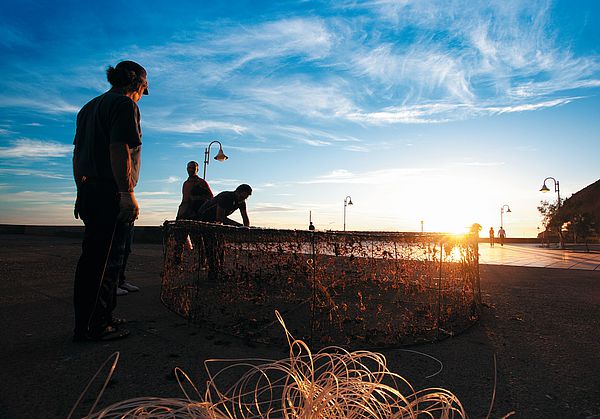
This stretch of coastline is known for being barely developed, revealing thousands of almost untouched corners. It lies hidden among cliffs, and is often battered by the trade winds and strong surf.
It’s no wonder that marine flora and fauna thrive in this area. The blue-green tones of its waters have made it one of the most cherished places for lovers of recreational diving. Its depths are home to octopuses, Canary Island lobsters, sea cucumbers, and seahorses. On its sandy shores, you can find frogfish, ratfish, San Pedro roosters and angel fish.
This place no longer draws conquering ships, but bathers and travellers conquered by its charm and tranquillity. If we follow the promenade and leave the dock to our left, we find ourselves at a small pebble cove presided over by El Roquete — a dwelling carved from the rock, evoking the pre-Hispanic settlements that stood here before the Castilians arrived.
This area is known for the many hidden tidal pools scattered along its shores. Places where, as the tide retreats, nature offers us splendid natural saltwater baths, perfect for a refreshing dip. Some are so large that one can even dive in them.
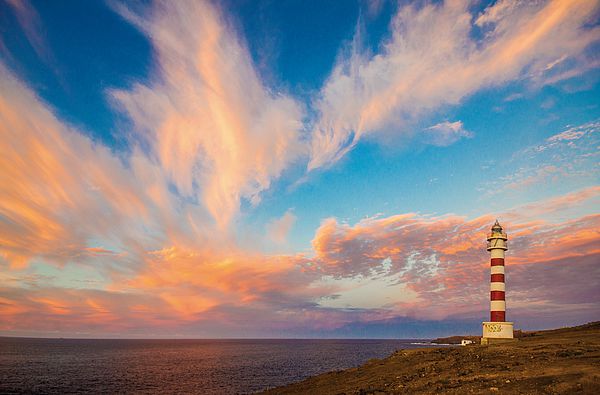
Majestic and commanding. Rising at the island’s far northern edge, stands the Punta Sardina Lighthouse. A few kilometres away from the village stands this luminous giant, once responsible for guiding maritime navigation along these north-western coasts of the island until not so many years ago, illuminating the stretch between Punta de la Aldea and La Isleta.
This solitary red-and-white titan has been the subject of countless photographs taken each day by visitors as the sunset falls behind it. Without doubt, one of the most repeated and representative postcards of Gran Canaria.
The northern municipality of Gáldar is one of the most important on the island in socio-historical and cultural terms. It stretches from its rugged coastline to the mountain peaks, its territory culminating in the Natural Monument of Montañón Negro, a volcano whose last eruption occurred around 3000 years ago, making it one of the most recent on Gran Canaria.
On our ascent from sea to summit we can enjoy splendid landscapes such as those surrounding the Monte Pavón recreational area, or broad panoramic viewpoints like the one located at the Caldera de Los Pinos de Gáldar, also in the higher part of the municipality.
It is worth noting that Gáldar is home, deep within Barranco Hondo, to the archaeological site of Risco Caído, now a UNESCO World Heritage Site.
If you’re coming to Sardina from the capital, you can take the northern road from Las Palmas de Gran Canaria towards Agaete, the GC-2. This motorway has an exit about 18 kilometres along, signposted for Gáldar. At the end of this deceleration lane there is a roundabout, one of whose exits will take you directly to Sardina del Norte.
It stands in the very heart of the city of Gáldar. The cave that gives its name to the archaeological park was discovered in the 19th century and is a magnificent example of the artistic expressions of the ancient inhabitants of Gran Canaria.
This place transports us to what was once the capital of indigenous Gran Canaria, and beside this site the island’s first great city was later built.